United Kingdom
 Login / Register



Paris Olympic champion Lola Anderson shares how mindset, balance and support helped shape her journey to the top of world rowing.
From writing down her Olympic dream at just 14 years old to becoming Paris 2024 Olympic champion in the women’s quadruple sculls, Lola Anderson has experienced both the pressure and rewards that come with elite sport.
After writing her name into Olympic history following Great Britain’s dramatic final push past the Netherlands in Paris, Anderson understands the importance of mental wellbeing both on and off the water.
Finding freedom on the water
For Lola, rowing has always provided an escape from pressure and outside stress.
“Any challenges I’ve faced tend to fade away when I’m on the water.
“When you’re passionate about maximising your potential in the boat, it’s really important not to place too much pressure on the outcome or your performance.”
Managing pressure at the highest level
Staying present has become central to how she manages the demands of elite rowing.
“Overthinking what lies ahead can make the training load feel more overwhelming. Take each session and day as it comes.
“An open and relaxed mindset is always easier than being anxious about what’s to come.”
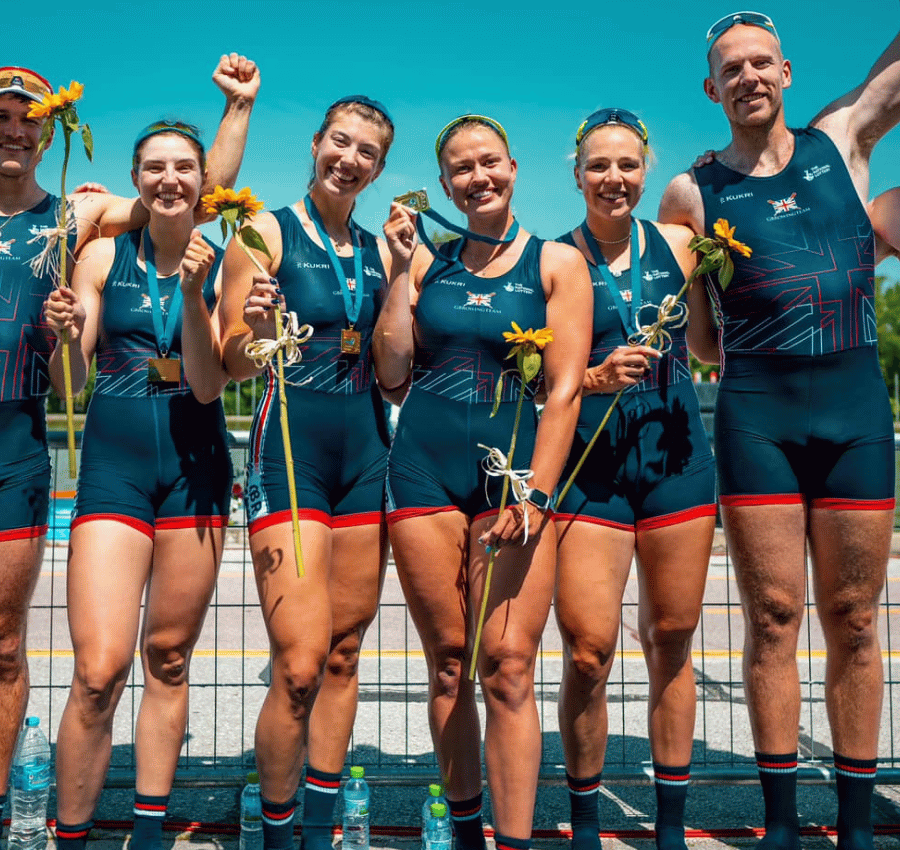
Despite competing on the biggest stage in sport, Lola believes mental challenges are something every athlete experiences.
“Recognising a mental hurdle doesn’t indicate weakness.
“As we headed into Paris, it would have been easy for us to let the pressure and expectations suffocate us before we even began racing.”
The importance of team culture
For Lola, team culture plays a major role in both performance and wellbeing.
“Rowing is one of the best team sports, requiring us to rely on each other both on and off the water.
“When the dynamic is strong, athletes communicate clearly, are more open to collaboration and take greater ownership of the team culture.”
Switching off away from sport
Away from training and racing, creating balance is equally important.
“I’ve always found that spending time with friends, even in simple ways serves as a good reset.
“My teammates and I often enjoy stress-free activities, such as pottery painting or cooking dinners for one another.
“Any activity that helps us genuinely switch off after training is beneficial.”
Speaking up and enjoying the journey
Lola helps younger athletes understand the importance of speaking openly and prioritising mental health.
“It can be easy to bottle up emotions and keep everything inside,” she said.
“Talking and sharing anxieties with teammates not only lightens your load, but may also encourage another teammate you didn’t know was struggling to do the same.”
Her own journey taught her that happiness and performance are closely connected.
“Transitioning into a university programme proved challenging.
“I internalised that I needed to work harder and viewed myself as ‘weak’ mentally.
“Once I shifted my focus to enjoy the day-to-day aspects of rowing, I was having fun again.
“Choosing my mental health over a desperation to perform took a weight off my shoulders and allowed me to train and race unburdened.”
Kukri is proud to support the British Rowing team and athletes like Lola as they continue to foster that sense of community on and off the water.