


 Australia
 Login / Register



The Australian Paralympic cyclist speaks to Kukri Sports on the pressures of elite sport, mental health and the importance of looking after yourself.
With this week marking Mental Health Awareness Week, Kukri Sports is proud to shine a light on its partner athletes and give them a platform to share their experiences.
Kukri and AusCycling are united by a shared belief that the wellbeing of athletes matters as much as their performance.
Through the partnership, they are committed to creating environments where athletes feel supported not only to compete, but also to speak openly about their experiences.
Introducing Darren
Few athletes carry their story quite like Darren Hicks. The 42-year-old South Australian grew up riding BMX bikes from the age of ten, but in 2014, everything changed.
A catastrophic brake failure on a truck he was driving led to a crash that killed two people and resulted in the amputation of his right leg. It was an event that would prove both devastating and defining.
Since then, Darren returned to cycling and never looked back. By 2017 he had claimed national titles, before becoming a double world champion two years later and fulfilling his ambition of Paralympic gold at Tokyo 2020.
Darren continued his success with bronze in the C2 individual time trial at the 2024 Paralympic Games, before returning to the podium once again at last year’s 2025 UCI Para-cycling World Championships, where he secured silver in the individual time trial.
Behind the medals, Darren has navigated a very human journey with his mental health – one he is passionate about speaking openly on, in the hope it might help others do the same.
The Pressure Behind the Dream
People assume the elite athlete lifestyle insulates you from real struggle. Darren knows differently.
“From my point of view, having it be what your life essentially revolves around can also add a level of trouble.
“If training isn’t going well, then it can feel like life isn’t going well, and that’s a very dangerous place to find yourself. What I try to remember is that life is far bigger than cycling, and what I do on the bike does not define me.”
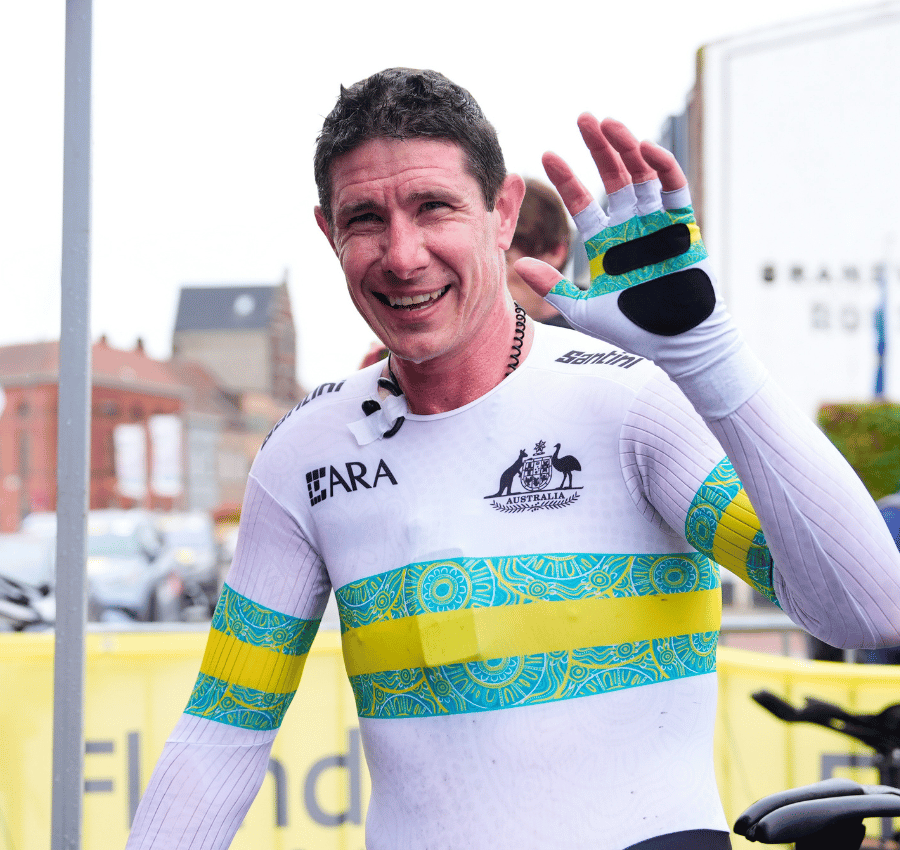
He is also honest about what happens when things do get bad, and what he has learned the hard way. “I’ve struggled quite a bit with my mental health, and the most important thing I’ve learnt is to not ignore when things get bad.
“It’s very rare for things to improve without talking to someone and getting at least a little help.”
Breaking the stigma
“We are seen as such tough and resilient people, handling pressure situations so easily and so often, that I think it’s easy for those outside the sports world to wonder what could possibly cause us mental health issues,” Darren explained.
He’d also like to see a broader shift in how sport views its athletes.
“Being an athlete is still working, and a job, and there is still a whole list of pressures that come along with it. They are pressures nonetheless, and they have the same effect on a person.”
Life beyond the bike
For years, Darren turned down time with friends and family, convinced any break in routine would cost him.
“In the beginning, I wasn’t open at all about my struggles, if anything I probably tried my hardest to hide them,” he said.
“As I grew as an athlete, I learnt more about what I needed and what I should do to be able to maintain the extremely high level of discipline required to be at the pointy end of elite sport.”
“I realised that having times when I didn’t feel like I was an elite athlete actually made me a better athlete, because I didn’t feel so restricted.
“One of the biggest things was allowing myself to have moments when I just needed to take a small step back, regroup and reset, because a small break when things are starting to go south is much less of an issue than trying to fix things when they’ve gone really bad,” he explained.
To anyone who is struggling
Darren knows that speaking up for the first time is the hardest part, and his message to any young rider is straightforward.
“Find someone within your world that you trust and just give them a bit of a rundown of what you are feeling or going through.
“At that point, you can get an idea of how it is received, and see how it feels to say it out loud.”
That willingness to share is exactly what Kukri Sports set out to create space for this Mental Health Awareness Week.
Stories like Darren’s don’t just matter, they give others encouragement to tell their own and seek the help they need.
Kukri are proud to be partnered with AusCycling and support athletes like Darren on and off the bike.
For more information on mental health and how you can get help, visit here.